Mikoko Pamoja
Mangroves are among the planet’s most powerful natural carbon stores, quietly capturing and holding vast amounts of carbon while protecting coastlines and nurturing marine life. In coastal Kenya, the Mikoko Pamoja initiative shows how conservation and community livelihoods can thrive together. Through this pioneering project, local villagers restore and protect mangrove forests and, in return, generate income by selling verified carbon credits. As the first mangrove carbon project in the world verified under the Plan Vivo standard, Mikoko Pamoja demonstrates a powerful model of community-led conservation—a true triple win for people, the environment, and biodiversity.

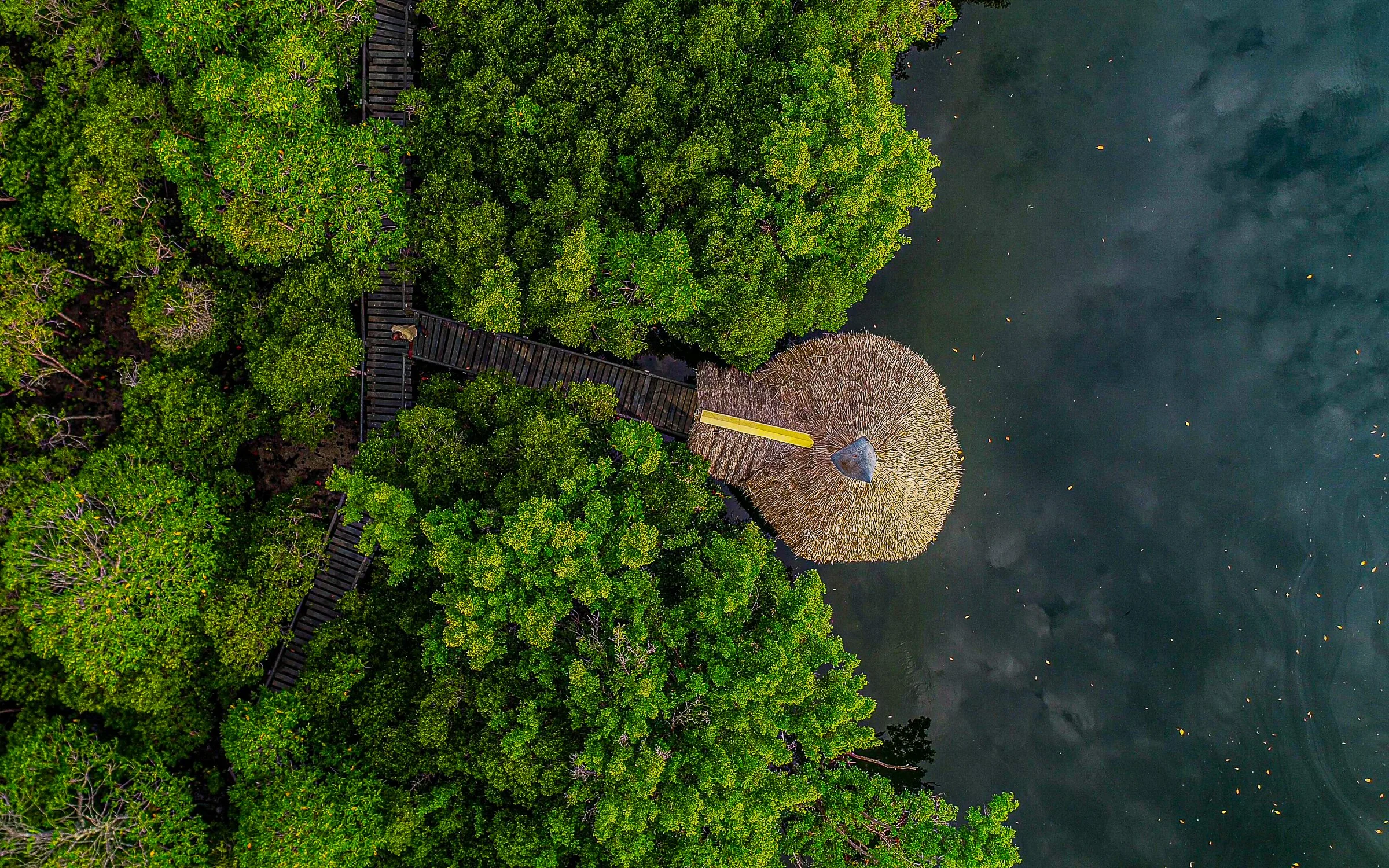
An aerial view of Gazi Women Board Walk, Ukunda Kenya. The Mangrove Boardwalk is a project funded by the City Council of Overije (Belgium) and the International Ocean Institute (IOI). It is a 300 m long relaxing walk through the animal rich mangrove forest. It is punctuated with the cool resting point, it also has a viewpoint providing a panoramic view of the bathing Mangroves. It was constructed to be a source of income for the community that are conserving mangroves.
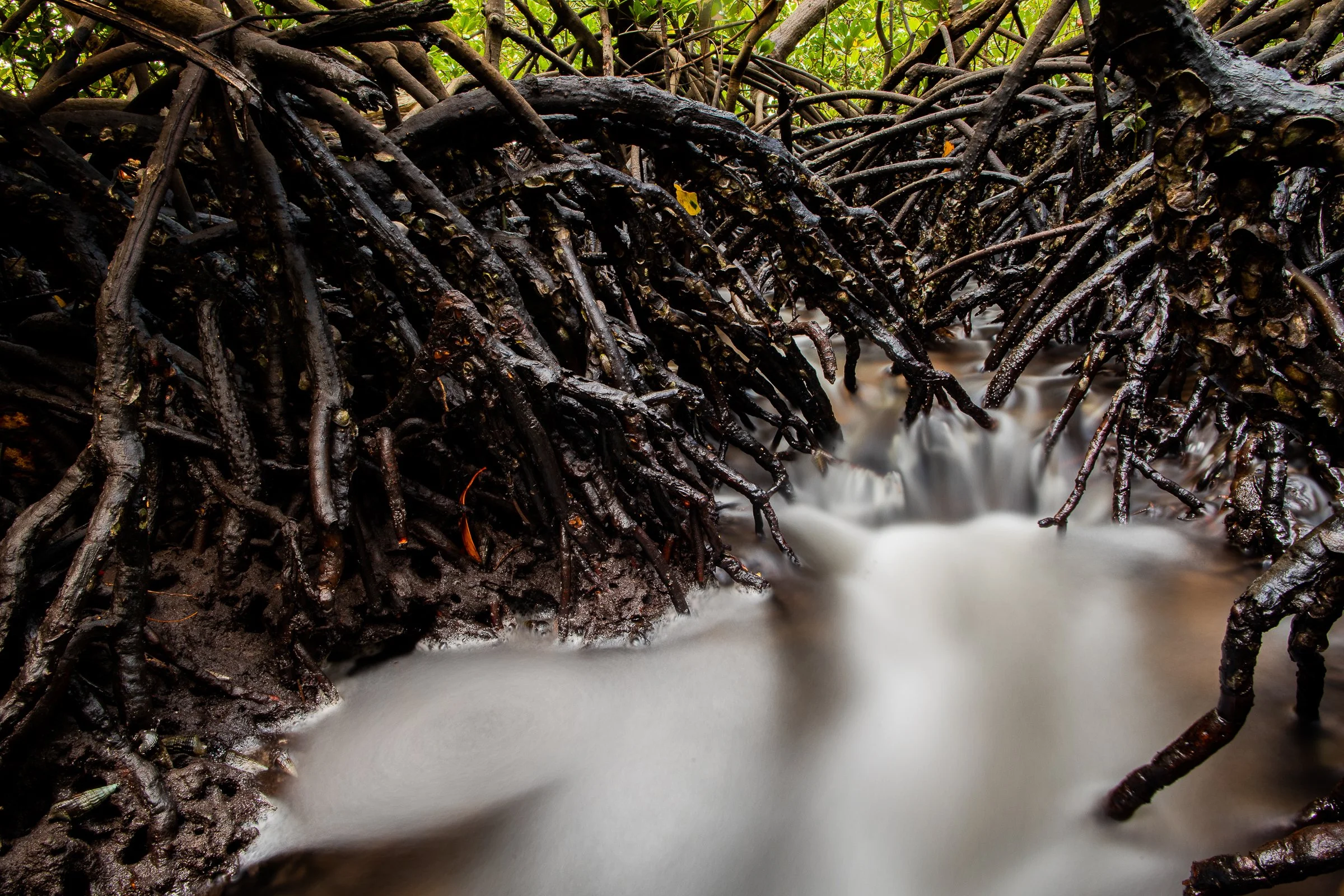
Loop-root mangrove (Rhizophora mucronata) root system, Gazi Bay, South Coast, Kenya.
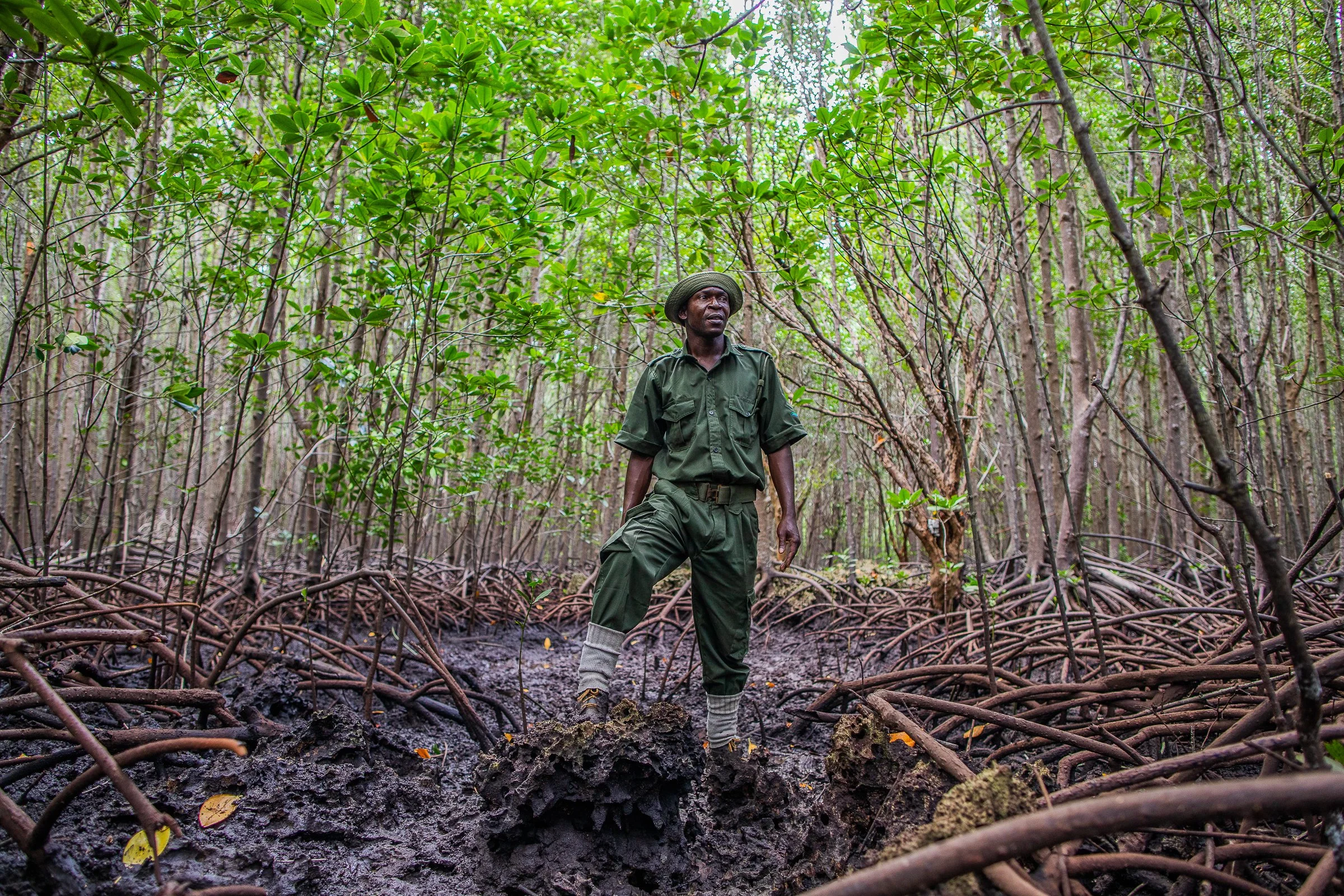
Shaban Mwinji, a community scout ranger, in Ukunda, Kenya. Standing in a restored Mangrove Forest by Mikoko Pamoja. Mikoko Pamoja is a community-led mangrove conservation and restoration project based in southern Kenya and the world's first blue carbon project. It aims to provide long-term incentives for mangrove protection and restoration through community involvement and benefit.
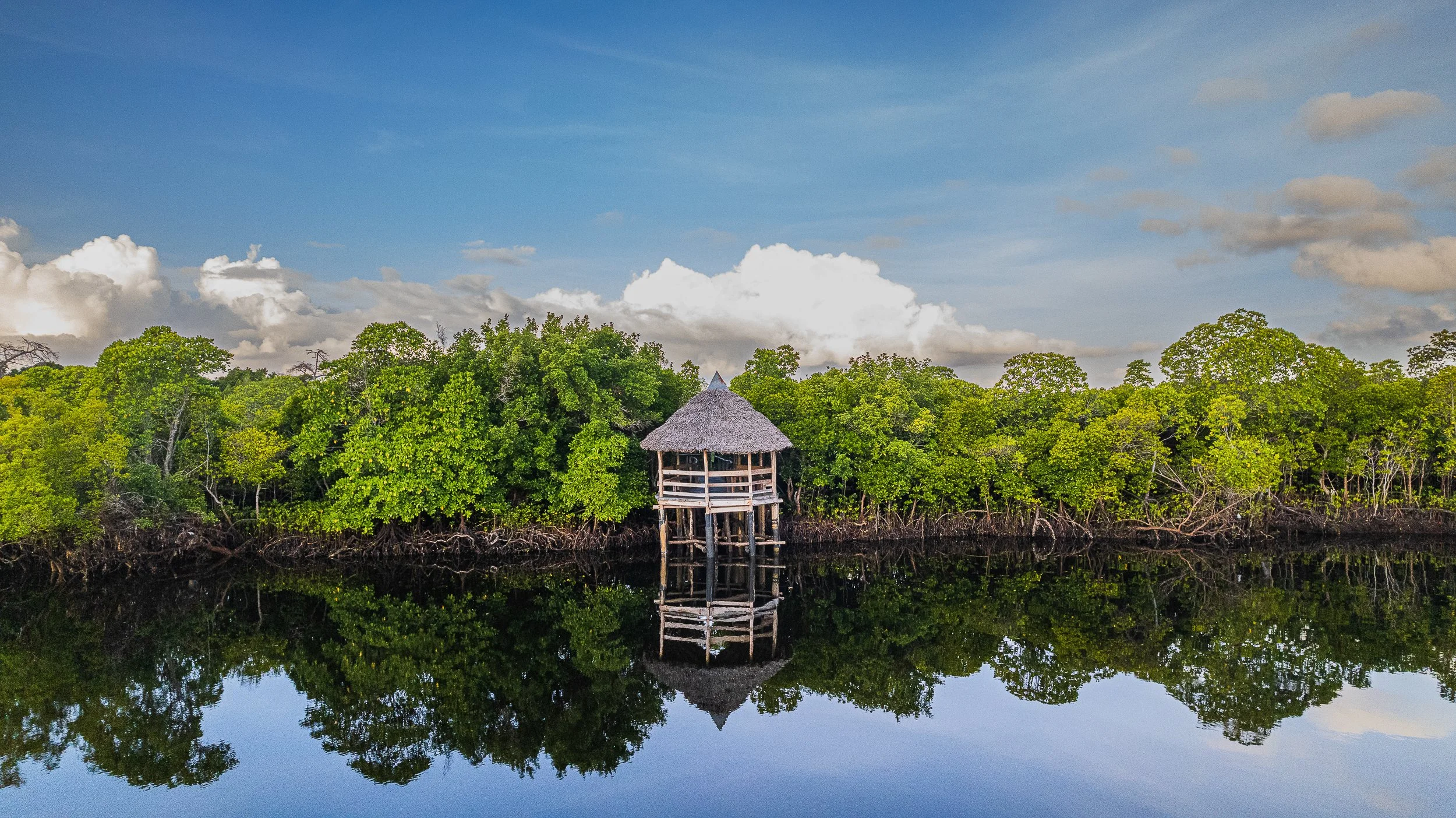
The Mangrove Boardwalk is a project funded by the City Council of Overije (Belgium) and the International Ocean Institute (IOI). It is a 300 m long relaxing walk through the animal rich mangrove forest. It is punctuated with the cool resting point, it also has a viewpoint providing a panoramic view of the bathing Mangroves. It was constructed to be a source of income for the community that are conserving mangroves.
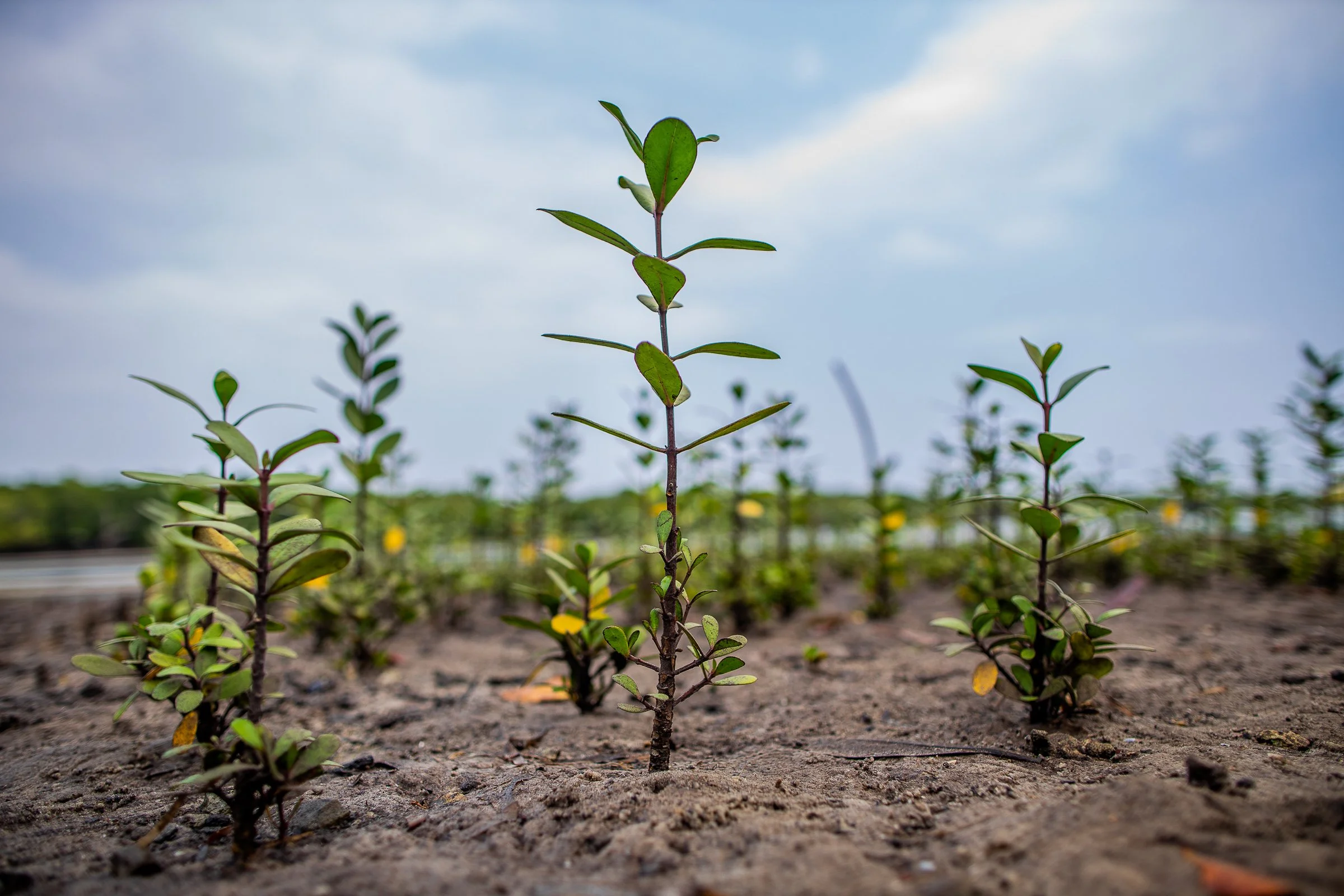
Loop-root mangrove (Rhizophora mucronata) tree nursery at the shores of Indian Ocean, Kenya. The nursery provides seedling to support the restoration effort of the degraded mangrove forests in Gazi, South Coast, Kenya.

A community ranger of the Mikoko Pamoja Project takes part in the quarterly scientific monitoring of carbon sink in the restored mangrove forest. Mikoko Pamoja is a community-led mangrove conservation and restoration project based in southern Kenya and the world's first blue carbon project. It aims to provide long-term incentives for mangrove protection and restoration through community involvement and benefit.
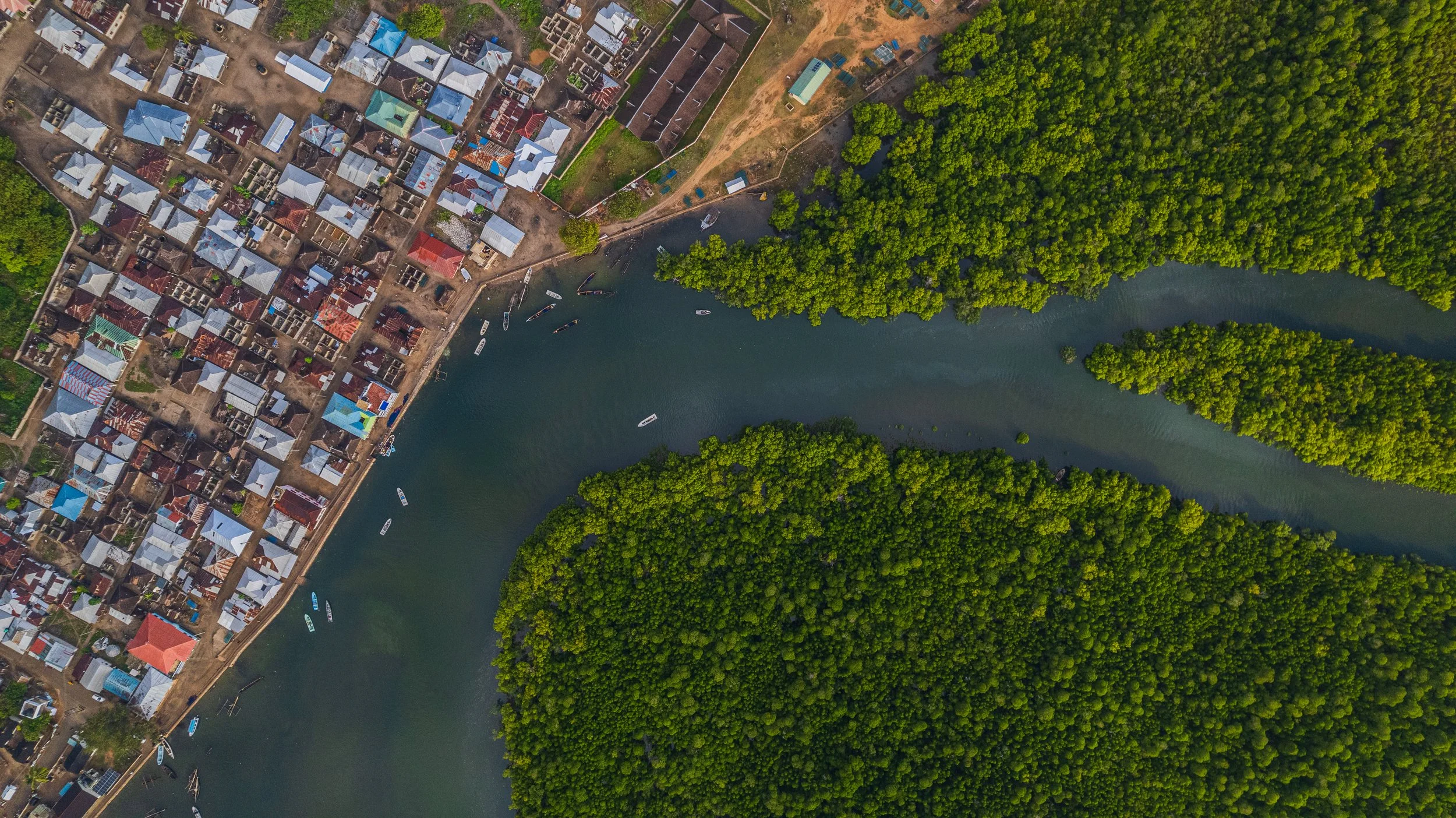
An aerial view of Vanga Sea Scape, a few kilometres way from Gazi showing the relationship between people and the mangroves
Mangroves are one of the planet’s most important stores of carbon. This story shows how villagers are selling carbon credits to support their livelihoods and save these extraordinary marine forests. A first in the world to verified by Plan Vivo standards, Mikoko Pamoja is indeed a triple win: for people, for the environment, and for biodiversity.